
Engineered Intelligence and The Data Science Problem in AI

.svg)


AgileOne
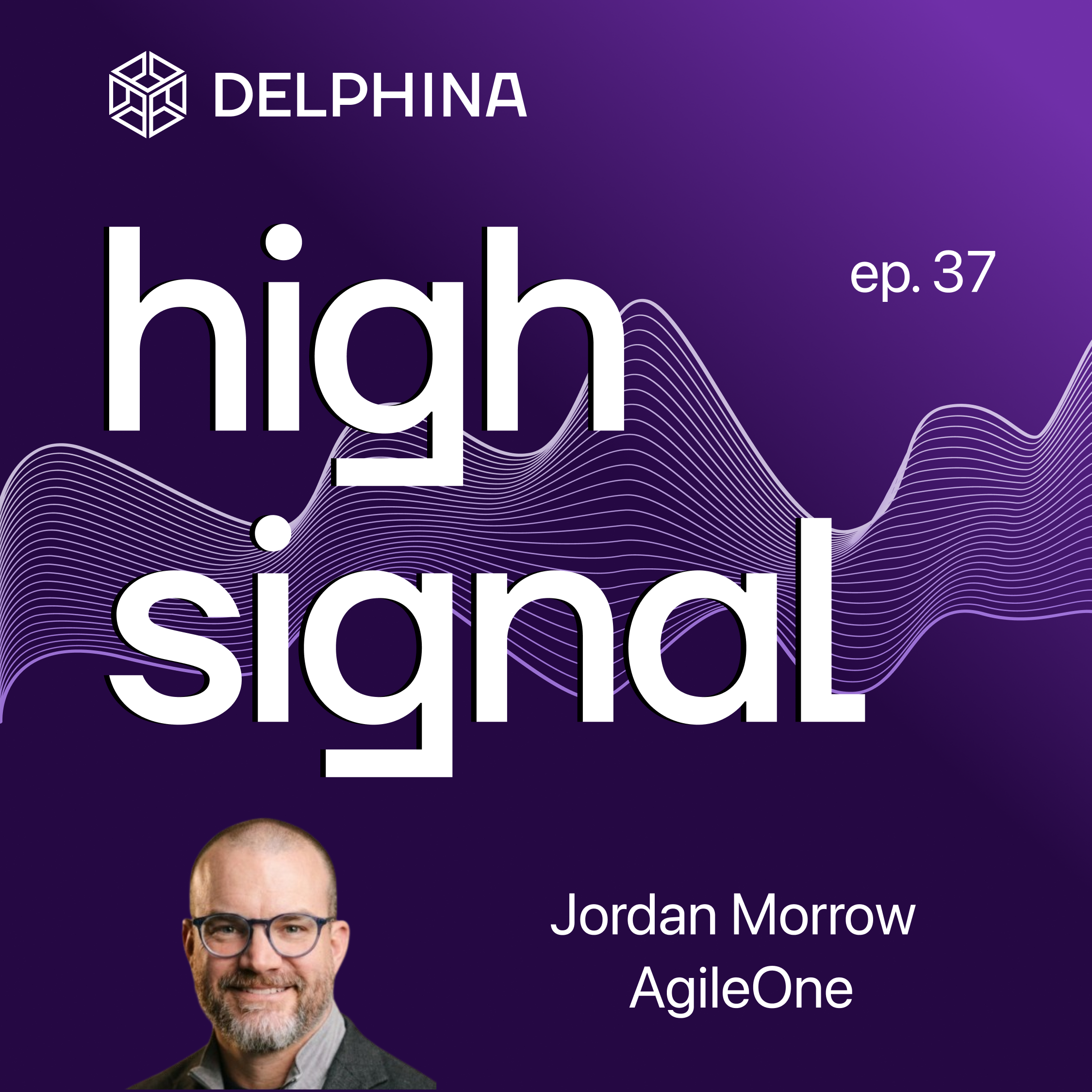
Jordan Morrow is known as the "Godfather of Data Literacy", having helped pioneer the field by building one of the world's first data literacy programs and driving thought leadership. Jordan is a global trailblazer in the world of data literacy, having built one of the world's first data literacy programs. He served as the Chair of the Advisory Board for The Data Literacy Project, has spoken at numerous conferences around the world and is an active voice in the data and analytics community. He has also helped companies and organizations around the world, including the United Nations, build and understand data literacy. When not found within his work of Data, Jordan is happily married with 5 kids. Jordan is also an avid trail runner and loves fitness, entering and racing in multiple ultra-marathons and having fun adventures in the mountains. Jordan is an avid reader, often reading (or using Audible) to go through multiple books at a time.


Delphina
Hugo Bowne-Anderson is an independent data and AI consultant with extensive experience in the tech industry. He is the host of the industry podcast Vanishing Gradients, a podcast exploring developments in data science and AI. Previously, Hugo served as Head of Developer Relations at Outerbounds and held roles at Coiled and DataCamp, where his work in data science education reached over 3 million learners. He has taught at Yale University, Cold Spring Harbor Laboratory, and conferences like SciPy and PyCon, and is a passionate advocate for democratizing data skills and open-source tools.
Key Quotes
Key Takeaways
Questioning replaces coding as literacy. AI has shifted the fundamental definition of data literacy from technical execution (like writing Pandas code) to "contextual application." The core skill for the modern worker is the ability to ask the right questions and interpret probabilistic results rather than mastering specific software syntax.
Human data misuse dwarfs AI hallucinations. Leaders frequently over-index on the risks of machine error while ignoring the fact that humans have "hallucinated" with data for decades. The primary threat isn't a probabilistic model being wrong; it’s the lack of human critical thinking and emotional intelligence to verify and apply the model’s output correctly.
Organizations are repeating 2012’s mistakes. Just as companies failed to extract value from "the sexiest job of the 21st century" by hiring data scientists without building a data-literate culture, they are currently buying AI tools while neglecting the fundamental change management and mindset shifts required for the 99% of non-technical staff to use them.
IQ and EQ anchor Engineered Intelligence. Jordan Morrow defines the formula for successful decision-making as "Engineered Intelligence": two parts data and AI combined with two parts human IQ and EQ. This framework ensures that AI augments rather than replaces the human intuition, gut feel, and empathy necessary for high-stakes business outcomes.
Shadow AI proves individual value. While 90% of enterprise-level generative AI projects are reportedly failing, "Shadow AI"—where individuals use tools outside of official channels—is thriving. This disconnect suggests that the value is real and immediate at the task level, but enterprise governance and product wrappers are lagging behind individual curiosity.
AI identifies human blind spots. Rather than just making old processes more efficient, leaders should use AI as a "PhD partner" to identify what humans are missing. By feeding deep research into models and asking for the "hidden pieces," teams can overcome the structural biases of their own mental models to prepare for Black Swan events.
AI ROI demands a two-year horizon. True return on investment from AI is typically 12 to 24 months out, but many leaders are too "dopamine-driven" to wait. Success requires a willingness to accept short-term losses and dedicated "experimentation time" for employees to ensure long-term competitive gains.
Data stacks fail without networking. The most successful Chief AI Officers don't win by building the perfect technical architecture in isolation. They succeed by "leaving their desks" and acting as change management specialists who bridge the gap between technical capability and on-the-ground business problems through constant internal networking.
Predictive modeling is the overlooked quick win. While leaders chase generative AI, mature ML-based predictive modeling has been delivering reliable business value for decades. Jordan steers clients toward predictive use cases first: take the data you already have, build predictions that "see around the corner," and capture ROI before investing in more complex generative or agentic systems.
Six of the top ten fastest-growing skills are human. The World Economic Forum projects that by 2030, adaptability, creativity, analytical thinking, and similar human capabilities will dominate the fastest-growing skills list. As AI automates more tasks, the competitive edge shifts to people who can problem-solve, communicate, and think critically, not those who know the most tools.
You can read the full transcript here.
00:00 Is AI Repeating the Same Mistakes as Data Science?
03:50 Defining Literacy in AI Era
06:10 Democratization and Risk
08:36 Prompting and Learning Fast
11:19 Augmentation and Culture Shift
12:20 Engineered Intelligence Framework
14:42 Why Data Science Fell Short
18:51 Tooling Mistakes and Shadow AI
20:08 From Chatbots to Use Cases
22:32 Three Pillars of AI
23:13 Real AI Adoption Playbook
23:59 Use Cases Over Hype
25:23 Leading Through AI Fear
28:21 Three Cs For Workers
30:54 Rethinking Education
32:46 Early Impact Of AI Tools
34:56 Making Time To Experiment
36:29 ROI Takes Time
37:50 Managing Agentic Teams
40:13 Dream Bigger Than Efficiency
42:24 Advice For AI Leaders
Links From The Show
Transcript
In the spotlight: Our most popular episodes
.png)
Why AI Won’t Fix Your Data Culture, It Will Only Amplify It (And What To Do About It)
Noah Bruegmann, President of Data CRT, joins High Signal to discuss how to move your data function from a cost center to a strategic "value center". He explains how AI amplifies your existing data culture, the importance of "no-assistance" reporting, and how rebranding documentation as "Context" can finally secure executive buy-in. Drawing on 15 years of experience spanning trading floors and Silicon Valley startups, Noah argues that for too long, data teams have been submerged under an "iceberg" of invisible data preparation. He details how the arrival of LLMs and agentic tools is fundamentally shifting this landscape, automating technical drudgery and allowing data professionals to transition into what he calls "Jack Ryan" mode: acting as high-level intelligence analysts rather than mere number crunchers.

.png)

Listen up: Our latest discussions
Hear the hottest takes on data science and AI.
.png)


Get the latest episodes in your inbox
Never miss an episode of High Signal by signing up for the Delphina newsletter.